What does "engagement" really mean in museums and heritage?
"Engagement" has become a buzzword in cultural institutions, but what does it actually mean? Time spent and button presses don't always equal meaningful connection. A guide to understanding real engagement in museums and galleries, and designing experiences that create lasting impact, not just measurable activity.

Martin Jefferies
Head of Marketing and CRM
5 min read
•

Photo by Sir. Simo on Unsplash
Engagement has become the watchword of cultural institutions. Funders want to see it measured. Boards want to see it increase. Digital teams are tasked with driving it. But what does it actually mean? The term gets used so broadly, covering everything from a child pressing a button to a scholar spending hours with an archive, that it risks meaning nothing at all.
The problem isn't that engagement is unimportant. It's that we've let easily measurable proxies stand in for the real thing. We count interactions, track time spent and monitor clicks, simply because they're what we can measure. In the process though, we've lost sight of what cultural engagement actually is: a visitor connecting with ideas, objects or stories in ways that resonate, provoke thought or shift understanding.
Why engagement is misunderstood
Dwell time, or time spent, is the most common engagement metric and the most misleading. A visitor who spends 10 minutes with an object might be deeply absorbed. But they might just as easily be confused, lost or waiting for a friend. Duration tells you something happened, not what. It certainly doesn't tell you whether meaning was made.
The assumption that longer is better doesn't hold up to scrutiny. Some of the most powerful museum experiences are brief: a single object that stops you in your tracks, a label that reframes everything you thought you knew, or a moment of unexpected recognition.
Interaction doesn't equal connection, either. Pressing buttons, swiping through screens or triggering multimedia content might certainly look like engagement. But interactivity can be shallow. A visitor who mechanically works through every interactive station in an exhibition might be less engaged than someone who stands quietly in front of a single painting.
The confusion arises because we've inherited engagement frameworks from other contexts – like entertainment, education and marketing – where the goals are very different. Museums aren't trying to maximise time on-site the same way retailers are. They're trying to create opportunities for learning, reflection and connection. Those things don't always look like conventional engagement.
<!-- CTA block -->
Different audiences, different needs
Engagement isn't uniform. What constitutes meaningful engagement for one visitor looks completely different for another. The goal isn't to create one perfect experience but to design for multiple modes of engagement.
Families often engage through conversation and shared discovery. Think about a child asking questions, a parent reading labels aloud or siblings comparing what they've seen. For these visitors, the museum is a prompt for dialogue and discussion. Success for family audiences might parents or children leaving with new questions, rather than definitive answers.
First-time visitors need orientation and confidence before they can engage deeply. If they're anxious about where to go, what's allowed or how long things will take, cognitive resources get spent on navigation rather than content. For these audiences, engagement often depends on removing barriers first: clear signposting, welcoming tone and reassurance that there's no "wrong" way to explore.
The enthusiasts and repeat visitors on the other hand may want layers of information that casual visitors would find overwhelming. They engage by going further: reading every label, accessing specialist content, making connections across objects. For them, engagement means discovering details, nuances and complexities that come from paying closest attention.
Storytelling in layered experiences
The challenge is designing experiences that work for all these audiences simultaneously. The answer isn't different paths for different visitors. Instead, it's about layered content that allows people to engage at the level that suits them.
Choice is fundamental. Visitors should be able to decide how deeply they want to go. A headline idea that works on its own, with supporting details or specialist information for those who want it.
Depth allows engagement to grow. A visitor might start with a quick overview and then choose to explore further. Or they might return on another visit and engage differently. Layered experiences make this possible by not forcing everyone down the same path.
Pacing matters, too. Engagement isn't about cramming in as much information as possible. It's about giving people space to think, absorb and respond. The best storytelling knows when to speed up and when to slow down, when to provide information and when to create silence. Digital tools can help with this, allowing visitors to control the pace rather than being dragged along by a fixed narrative.
Digital should be invisible when it's working well: present when needed, absent when not.
Digital as support, not centre stage
There's a tendency to assume that "engagement" means "digital interaction". But the most effective digital tools in cultural spaces aren't the ones demanding attention – they're the ones quietly supporting deeper engagement with the physical experience.
Complementing physical spaces is where digital excels. A digital guide that provides context for an object you're standing in front of. Audio that helps you notice details you'd otherwise miss. Translation that makes content accessible in your language. These tools enhance what's already there, rather than compete with it.
Avoiding overload is critical. Some institutions pack in every possible digital feature, assuming that more is better. The result can be cognitive overwhelm. Visitors spend so much time managing the technology that they don't actually look at the art. Digital should be invisible when it's working well: present when needed, absent when not.
The best digital interventions are those visitors barely notice. They solve a problem (I can't read this text; I don't understand this context; I want to know more) without creating new problems (Where do I tap? Why isn't this loading? What am I supposed to do with this?). Technology that gets out of the way allows engagement with content to happen.
Designing for memory, not metrics
If engagement is about making meaning, then the real test isn't what happens during the visit – it's what happens later. What do visitors takeaway? What do they remember? How did their understanding change?
Emotional resonance is often what sticks. People remember how something made them feel more reliably than they remember facts. A story that moved them. An object that surprised them. A moment of recognition or connection.
Takeaways don't have to be tangible but they should always be real. It could be a new perspective on a historical event, a question they'd never considered before or simple a desire to learn more.
Ultimately, engagement in cultural contexts isn't about maximising activity. It's about creating conditions where connection becomes possible. That might look quiet. It might look slow. It might not generate impressive analytics. But if visitors leave with something that matters to them, then that's engagement worth designing for.
Discover tools for meaningful engagement
More stories

Limited capacity shouldn't mean limited access: audio description tours for major exhibitions

Ulrich Museum of Art launches interactive digital maps with Smartify
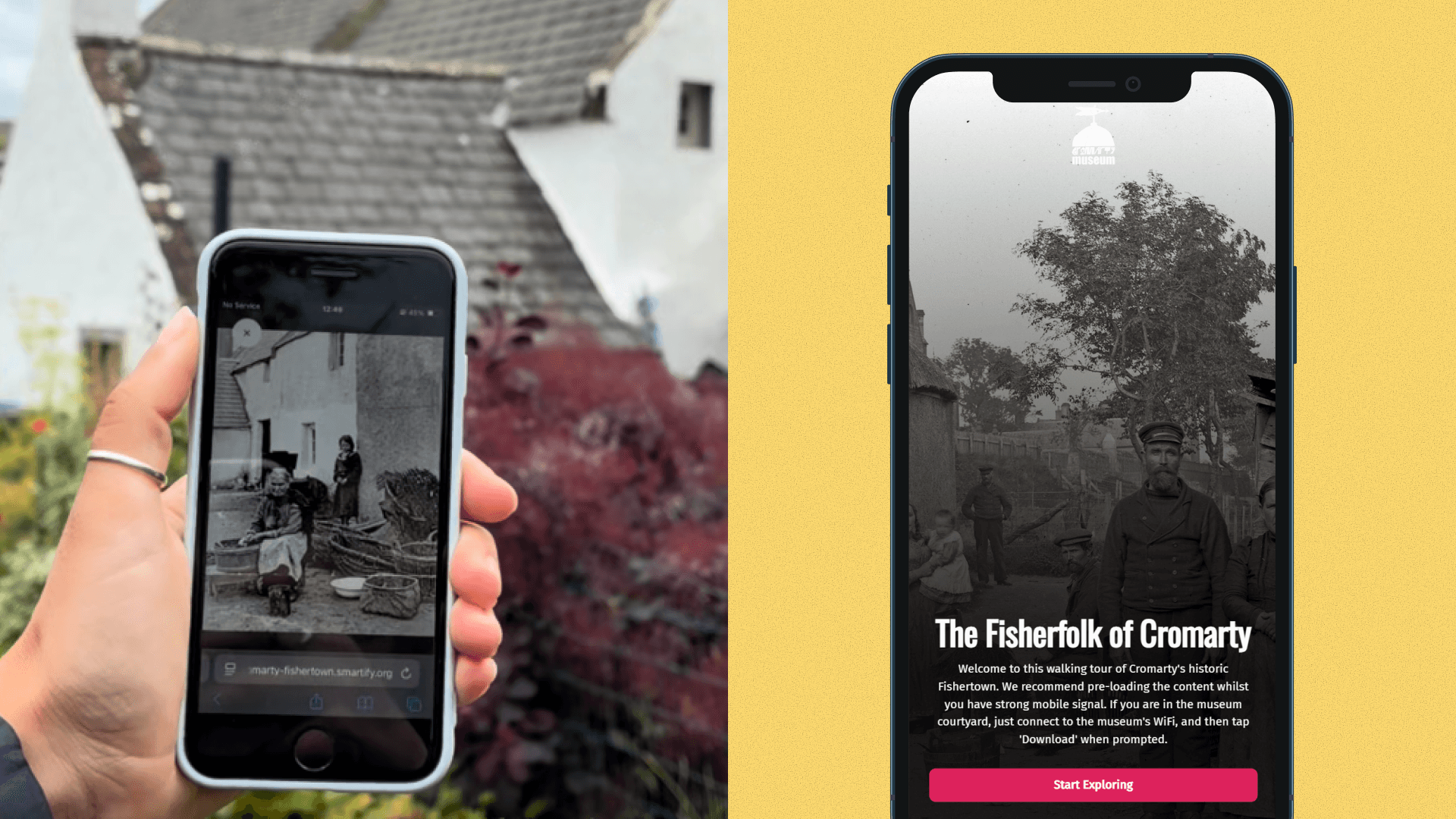
Historic photographs come to life in new community-created augmented reality experience

Bodleian Libraries launches new Outdoor Audio Trail with Smartify

Horniman Museum and Gardens launches playful AR trail with Smartify