From scripts to systems: rethinking content production for digital visitors
Write once, deploy everywhere: audio tours, mobile text, video narration, AR overlays, screen reader alternatives. Format-agnostic content isn't just efficient – it's how you make interpretation accessible by design rather than adaptation.

Thanos Kokkiniotis
CEO and Co-Founder
3 min read
•

Museums traditionally produce content in isolated formats: audio guide scripts, wall labels, catalogue essays, video transcripts. Each exists independently, created for specific contexts with minimal crossover. This approach made sense when distribution channels were distinct and fixed. It makes little sense now, when the same interpretive content should flow seamlessly across audio tours, mobile apps, accessibility features, and immersive experiences.
The shift from format-specific scripts to format-agnostic systems isn't just operational efficiency – it's about making content sustainable, accessible, and responsive to how visitors actually engage.
The real value is consistency: visitors don't encounter contradictory information depending on which format they access, and updates propagate across all channels simultaneously
Format-agnostic content: write once, deploy everywhere
Format-agnostic content separates substance from presentation. Instead of writing "an audio script" or "a video script," you create core interpretive content that adapts to different delivery contexts without rewriting.
This means a single piece of object interpretation can generate: spoken audio for tours, on-screen text for reading, captions for video, alternative descriptions for screen readers, and contextual information for AR overlays. The content remains consistent across formats while presentation adjusts to visitor needs and technical contexts.
The efficiency gains are substantial – one writing process instead of five. But the real value is consistency: visitors don't encounter contradictory information depending on which format they access, and updates propagate across all channels simultaneously rather than requiring coordinated revisions to multiple independent scripts.
<!-- CTA block -->
Accessibility-first scripting changes what you write
Accessibility often gets treated as adaptation – take existing content and add alternatives afterward. This produces inferior results and doubles work. Accessibility-first scripting inverts the process: create content that works accessibly from the start, and format-specific versions inherit those qualities.
This means writing with both visual and non-visual communication in mind. Descriptions that work for audio naturally work for screen readers. Content structured clearly for reading adapts well to speech. Visual information described effectively for blind visitors improves understanding for everyone.
Practically, accessibility-first scripting means avoiding phrases like "as you can see" or "look at this detail" and instead describing what's actually visible. It means considering pacing for audio consumption, not just visual scanning. It means structuring information so visitors can navigate and skip effectively regardless of format.
The result isn't compromised content – it's clearer, more inclusive interpretation that serves diverse visitors better across all formats.
Reuse across contexts: one asset, multiple experiences
Format-agnostic content enables genuine multi-channel deployment. The same interpretive writing can power audio stops on guided tours, provide context in object-focused apps, supply narration for video content, inform AR overlays showing historical context, and generate text alternatives for accessibility.
This reuse only works when content is authored with flexibility in mind. Over-specific references break down – "in front of you" makes sense on a physical tour but not for at-home audiences. Time-based cues work for audio but confuse readers. Format-neutral language maintains meaning across contexts while allowing presentation-layer adaptation.
Managing updates: content as living infrastructure
Format-agnostic systems make updates sustainable. When scholarship evolves or errors are discovered, corrections deploy everywhere simultaneously. No hunting through independent scripts to ensure consistency. No risk of overlooking formats, leaving visitors with contradictory information depending on which channel they access.
Version control becomes manageable when content isn't fragmented across formats. You track changes to interpretive substance, not to dozens of format-specific variations. Rollback works cleanly if updates create problems. Content history reveals how understanding evolved over time.
Measuring what matters
Format-agnostic systems enable meaningful performance measurement. Instead of knowing an audio stop was accessed, you understand whether the underlying interpretive content resonated, regardless of format. Completion rates, engagement duration, and visitor feedback aggregate across delivery channels, revealing which content works and which needs revision.
This shifts content decisions from format preferences to interpretive effectiveness. The question isn't whether visitors prefer audio or text – it's whether specific content successfully communicates ideas, and how format affects that success for different audiences.
Explore content systems built for multi-format delivery
More stories

Limited capacity shouldn't mean limited access: audio description tours for major exhibitions

Ulrich Museum of Art launches interactive digital maps with Smartify
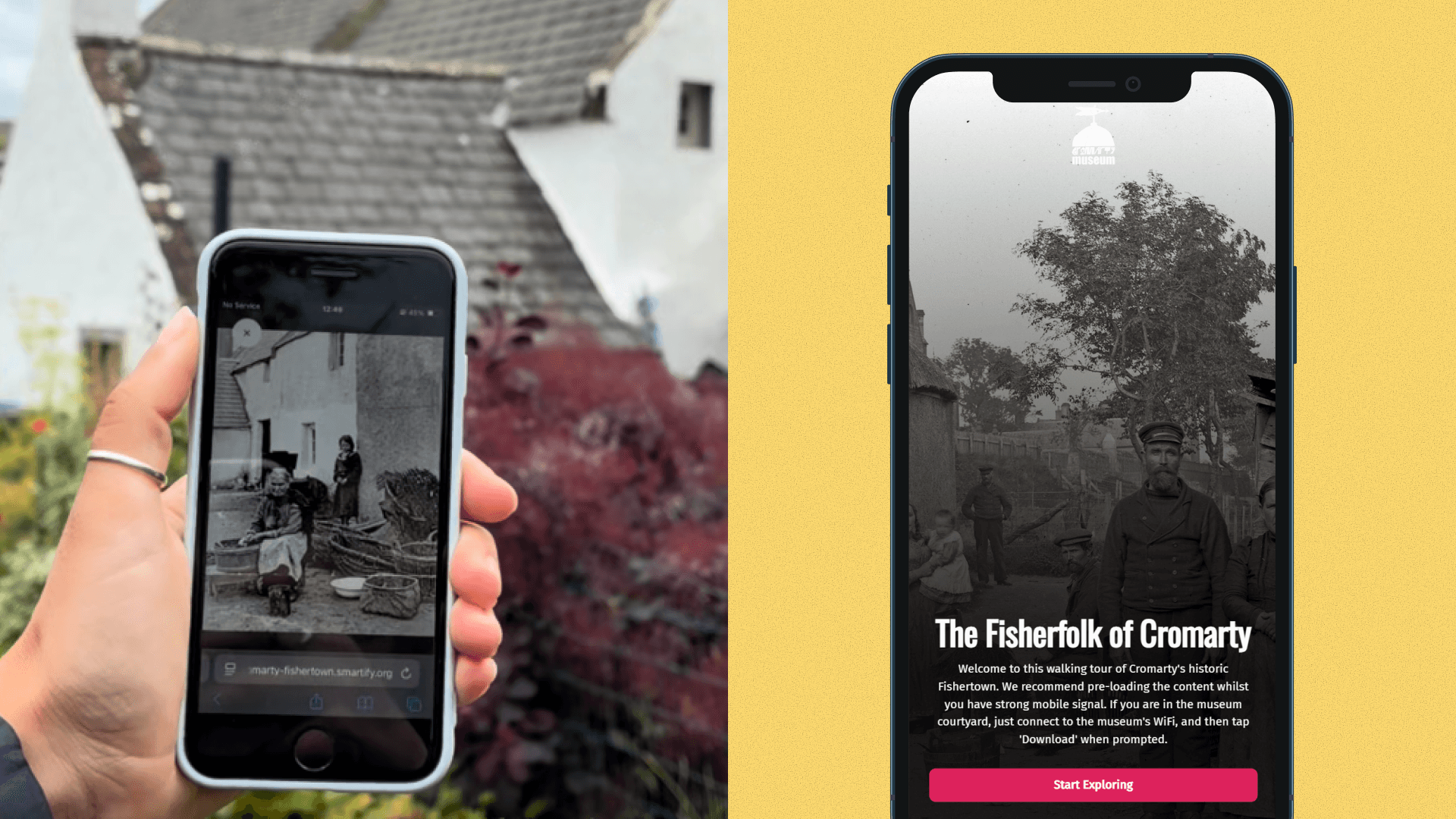
Historic photographs come to life in new community-created augmented reality experience

Bodleian Libraries launches new Outdoor Audio Trail with Smartify

Horniman Museum and Gardens launches playful AR trail with Smartify